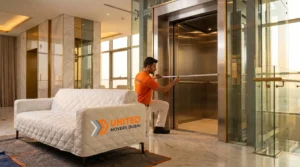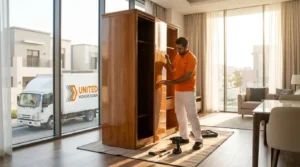
Moving a sofa, wardrobe, dining table or wall mirror between two Dubai addresses exposes each surface to corridor friction, lift-door contact and closed-truck heat. Booking a furniture moving service with protective wrapping matches every piece to one of four surface covers before loading begins.
How is furniture protected for a move in Dubai?
The stretch film is used to protect furniture for move in Dubai when it has fabric upholstery, breathable blankets are used for leather case goods and foam corners are used on wooden case goods and rigid cardboard boxes are used for glass tops and mirrors. The wrap is put on each furniture surface within the pickup room before the furniture is lifted towards the hallway by the crew.
Household packing materials are used for boxes, tape and cartons for household goods (not furniture surfaces). The crew does not put protection on all the objects, but protection is assigned depending on the porosity of the surface, fragility of edges and weight of rigid panels:
| Furniture Object & Surface | Assigned Protective Wrap | Surface Risk Prevented | Handling Note |
|---|---|---|---|
| Fabric Sofas, Armchairs, Mattresses | Industrial stretch film | Dust transfer, fabric snags, hand marks | Overlapped across cushions and skirts |
| Leather Sofas, Recliners, Dining Chairs | Breathable padded moving blankets | Trapped condensation, surface sticking, heat marks | Secured with external tape away from hide |
| Wooden Cabinets, Wardrobes, Tables | High-density foam corners and blanket pads | Veneer chipping, corner crushing, panel scuffs | Applied to all eight corners and exposed edges |
| Glass Tabletops, Mirrors, Glazed Doors | Rigid telescopic cardboard boxes | Impact shattering, torsional cracking, edge nicks | Packed flat with corner buffers and fragile labels |
How are leather sofas and chairs protected?
Leather sofas and chairs are protected by draping breathable padded moving blankets over the entire hide surface and securing the outer wrap without letting adhesive tape or tight plastic touch the leather. Breathable padding prevents trapped moisture while cushioning the frame through apartment doors and service lifts.
Moisture and heat inside a closed truck
The interior temperatures of closed moving trucks parked at loading bays in Dubai are also building up during the time they are parked, as are also the high moisture levels in the coastal air, which is monitored by the National Center of Meteorology’s relative humidity network. If the non-porous stretch film is placed against natural or bonded leather in a warm truck box, the surface moisture in the leather gets trapped between the plastic and the hide and condenses. With breathable cotton-blend blankets, the air can flow through the blankets while they are loaded and transported.
Finishes that mark under film
Aniline, semi-aniline and corrected grain leather finishes lose their static creases and sheen when straps are tightened on the leather. Placing a soft blanket layer over the leather sofa or armchair will protect the finish from rubbing, tie-down straps and other objects in the truck.
How is glass and mirrored furniture protected?

For furniture with glass and/or mirrored tops, all separate glass tabletop, shelf and mirror panels are taken off of the furniture frame, placed in a fitted cardboard box and then loaded. Glass components are never loose in a cabinet or un-boxed on a table top.
Glass tops
Tempered and annealed glass dining tops weigh between 25 kg and 70 kg depending on thickness and length. Carrying a glass slab flat stresses its center span. Movers lift the glass top off its timber or metal base, fit protective sleeves along the four perimeter edges, slide the slab into a telescope picture box, and load it vertically against the truck bulkhead.
Mirrors and glazed doors
Wall mirrors, dressing-table mirrors and glass cabinet doors break if vibration transfers from a wooden frame into the glass pane. A full-length standing mirror or vitrine door weighs 12 kg to 35 kg. The crew unbolts dressing mirrors from chests, tapes a protective grid across glazed cabinet doors if fixed, and boxes each unit individually so hardware never strikes the glass.
How are wooden cabinets and case goods protected?
High density foam corner guards are installed on all exposed 90 degree edges of wooden cabinets and case goods and polished panels and veneers are covered with padded blankets. Edge and panel protection protect against an impact dent when tall wardrobes and sideboards roll through 90cm apartment doorways.
Foam corners
If a piece of furniture comes in contact with a door frame or lift jamb, the first contact will occur at the 8 outer corners of a dining table, sideboard, chest of drawers or wardrobe. Movers will clip and protect L and U shape foam blocks over each sharp corner and plinth edge before they pick up the unit, thereby avoiding crushing miter joints and splitting solid-wood edges.
Panels and veneers
Unless the dust grit is protected from the surface in transit, it is capable of scratching oak, walnut, ash and high-gloss lacquered MDF panels. All counter tops are wiped clean and all loose ornaments are removed from the counter tops by the customer before the crew wraps case goods.Customer will clear all counter tops, remove loose ornaments, empty drawers and remove surface grit before the crew wraps case goods. The flat doors and side panels are then covered by movers so that adjacent boards don’t rub during braking.
How are upholstered pieces protected?
Upholstered pieces are protected by sealing fabric sofas, fabric dining chairs, upholstered headboards and mattresses in overlapping layers of tear-resistant stretch film inside the room of origin. The film barrier blocks corridor dust, elevator grease marks and rain splashes between the building lobby and the truck ramp.
On multi-cushion fabric sofas, movers remove loose scatter pillows, wrap the main frame in two to three overlapping passes of stretch film, and seal removable seat cushions in individual film sleeves so fabric seams do not stretch during vertical lifting. The material table applies directly to sofas, covered in how sofas are wrapped by fabric type.
Does protected furniture still need to be disassembled?
Protected furniture still requires disassembly when its wrapped width or diagonal depth exceeds the doorway or lift opening. Protective wrapping with stretch film, breathable blankets, foam corners and boxes for glass and mirrors adds 2 to 6 cm. Wrapping adds thickness to each piece, which decides which pieces are disassembled first to clear the door.
Lina Al-Zarqani is a professional content writer with 12+ years of experience in the movers and logistics field, crafting practical relocation guides, storage advice, and packing strategies tailored to UAE residents. She transforms complex moving processes into clear, actionable information that supports smooth and stress-free relocations. Her writing blends industry knowledge with customer-focused solutions.