
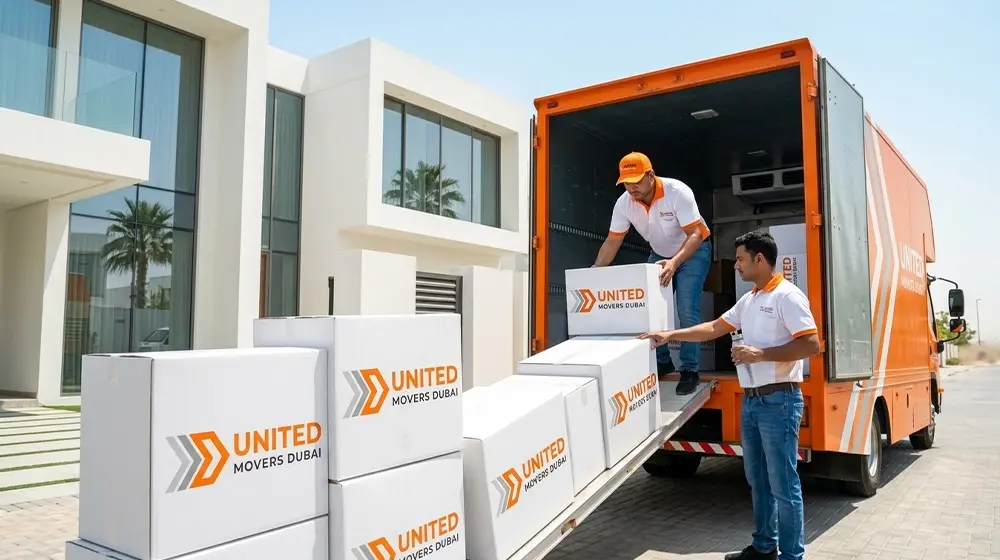
Most people moving during Dubai summer already know it’s going to be hot. What they don’t always know is how specifically that heat changes the job, not just the hours, but what goes wrong, what needs protecting, what costs more, and what a sensible moving crew actually does differently between July and January.
This isn’t a guide about surviving the heat. It’s about understanding why summer moves in Dubai work differently so yours doesn’t go sideways.
Why Dubai Summer Is Its Own Category
The UAE National Centre of Meteorology records mean maximum temperatures in August between 40.9°C and 43.2°C and those are averages. In July 2024, the heat index in Dubai reached what felt like 62°C on at least one recorded day, once humidity was factored in. August 2025 saw the UAE hit a nine-year temperature record of 51.8°C in parts of Al Ain.
That’s the environment your belongings, your movers, and your furniture are operating in.
Outdoor physical exertion in temperatures above 40°C with high humidity becomes dangerous relatively quickly. 20 to 30 minutes of sustained work without rotation or rest is pushing it. Moving furniture involves carrying things through sun-exposed loading docks, into trucks that have been baking for hours, and then doing the whole thing in reverse at the destination. A moving crew that isn’t managing this properly isn’t just slow. They’re at risk.
And a truck cab that’s been sitting in a Dubai car park since 7 AM, sealed, is not a climate-controlled environment. It’s an oven. Anything inside it for more than 30 to 45 minutes without protection behaves accordingly.
What Summer Heat Does to Belongings the Actual List
This part usually gets one vague line in most guides. “Be careful with electronics.” Here’s what actually gets damaged and why:
Electronics are the clearest case. Laptops, televisions, consoles, printers all rated for maximum storage temperatures around 45°C. A sealed truck in direct Dubai sun can exceed that. The damage isn’t always obvious immediately. It often shows weeks later: battery that won’t hold charge, screen with a faint heat mark in one corner, hard drive that starts throwing errors. Electronics need to travel in a cooled environment either the vehicle cab or a climate-controlled cargo area. Not the standard truck bed.
Solid wood furniture specifically warps when it loses moisture fast in extreme heat. A good-quality dining table, a bookcase, a wardrobe frame. Small cracks can appear in joints, particularly in pieces that use traditional construction rather than metal brackets. Wrapping in furniture blankets helps. But the bigger factor is transit time. The less time spent in heat, the less risk.
Leather dries out and can crack with extended exposure. This is especially a problem if the move runs long, a summer job that stretches into midday because of delays is putting leather sofas and chairs through conditions they weren’t built for.
Other things people forget about until they open boxes:
- Candles and wax decorations they melt and bond to whatever surface they’re touching
- Vinyl records warp at temperatures above 40°C fairly quickly
- Photographs in albums paper-based photos can stick together in heat
- Artwork on canvas the glue in stretcher bars can soften; prints can develop heat damage
- Soft plastic items and certain resin décor deform without visible warning in high heat
Wine and medication that has a temperature requirement should never go in the truck. Those travel with you in an air-conditioned car. Same for anything that would be destroyed if left in a parked car on a July afternoon, because the truck is effectively that.
Costs: Is Moving in Summer Dubai Actually Cheaper?

Yes genuinely, not just marginally. Demand for movers in Dubai falls significantly between June and August. A large portion of residents travel, families leave for school holidays, companies slow down on relocations. Moving companies that are fully booked from September through April have real availability in summer and softer pricing to match.
The rough savings comparison:
A studio apartment that costs AED 800 to 1,400 in peak season typically runs AED 700 to 1,200 in summer. A 3-bedroom villa that would normally be AED 3,000 to 5,000 runs closer to AED 2,800 to 4,500. Across move types, the saving is roughly 10 to 15 percent, sometimes more if you can be flexible on exact dates.
But a few things can push the summer cost up that don’t apply in cooler months:
Early start fees. A 5 AM or 6 AM start often carries a small premium typically AED 200 to 400 because the crew mobilises before standard hours and the truck preparation sometimes happens the evening before. Worth paying without question.
Climate-controlled vehicle. If your move includes electronics, leather furniture, artwork, or antiques, a temperature-managed cargo vehicle costs more to operate. Add AED 300 to 600 for most jobs. Against the cost of replacing a damaged TV or a warped antique table, it’s a straightforward calculation.
Longer job times. Summer moves are scheduled with rest breaks built in. A job that takes eight hours in February might take nine and a half in July because of mandatory downtime during the hottest window. You’re not paying for wasted time, you’re paying for a crew that is going to still be functional at the end of the day.
And if there’s a gap between move-out and move-in which happens often in summer when timing is complicated by travel, short-term storage in Dubai costs AED 15 to 40 per cubic metre per month. Climate-controlled is more expensive but non-negotiable in summer for anything on the list above.
The Timing Question: When and What Time of Day
June is better than July or August if you have flexibility. The first two weeks of June often see temperatures in the high 30s rather than the mid-40s, humidity hasn’t yet peaked, and the job can still be completed in a reasonable morning window. Late September is the other option, summer is technically ending, conditions are improving week by week, and you’re still getting some of the availability benefits.
July and August are the hardest months to work in, full stop. August is statistically Dubai’s hottest month based on 49 years of NCM weather station data. If the move is happening then, the time-of-day structure becomes everything.
What a sensible summer schedule looks like:
- 5:00 to 5:30 AM: crew at the property, building check-in, service lift padded and ready
- 5:30 to 9:30 AM: outdoor loading, all the heavy furniture, the kitchen, the storage room
- 9:30 to 10:00 AM: final outdoor items, truck sealed
- 10:00 AM to 4:30 PM: transit or rest period; outdoor work stops during this window
- 4:30 PM onwards: unloading at destination as the sun starts to drop
Dubai’s Ministry of Human Resources prohibits outdoor work between 12:30 PM and 3:00 PM from June 15 to September 15. Any moving company operating properly respects this not as a preference, as a legal requirement. A quote that assumes full-pace outdoor work at 1 PM in August isn’t reflecting how the job actually has to run.
For a studio or one-bedroom apartment, the whole job can fit in the early morning window. For a villa with a full garden and multiple rooms, a split-day structure morning for loading, evening for unloading is the realistic option.
How Building and Community Rules Apply in Summer

The building logistics don’t change because it’s hot. But the cost of getting them wrong is higher when your crew is standing outside a community gate in 43°C waiting for a permit to be sorted.
Gated villa communities Arabian Ranches, Jumeirah Park, The Springs, Emirates Hills require vehicle pre-registration before a moving truck can enter. Most ask for 48 to 72 hours. EMAAR properties ask for five working days. These timelines exist regardless of the season, but in summer, when families are sometimes trying to move quickly because a trip got in the way of the planning, it’s where the most last-minute problems happen.
Elevator bookings for apartment moves need to be morning slots in summer. A service elevator shaft in a Dubai tower with the doors open at noon collects heat fast. Most buildings allow slot changes if you ask in advance, specifically for the earliest available window and explain the heat management reason. Building facilities teams understand this and will usually accommodate it.
For apartment movers in Dubai working summer jobs in Business Bay or Downtown Dubai, the key is having all permits confirmed the day before and the crew at the building before 6 AM. Our Dubai Marina movers run summer jobs starting at 5:30 AM as standard not as an option. For villa movers in Dubai working gated communities, the community gate registration goes in the moment the booking is confirmed, not the day before.
Packing Adjustments That Make a Difference in Summer
The packing itself doesn’t change dramatically but a few things are specific to summer moves and genuinely matter.
Electronics out of the truck bed. Every electronic device gets individually wrapped in anti-static material, then in a furniture blanket, and travels in the vehicle cab with the air conditioning running. If there are too many for one cab, they go in a separate personal car. The rule: if it has a battery, a screen, or a circuit board, it doesn’t go in a standard cargo area in July.
Tape matters more than people think. Standard masking tape loses adhesion above 40°C. Boxes sealed with it can open in the heat without any impact. Use proper polypropylene packing tape rated for temperature. Any moving supply shop in Dubai stocks it.
Label heat-sensitive boxes clearly. “FRAGILE HEAT SENSITIVE” in addition to the room label means the crew knows these don’t go in the external cargo stack during midday transit. The crew can’t protect what isn’t flagged.
Prepare an essentials bag that travels with you in the car:
- All documents Emirates ID, passport, lease, school records if you’re moving with kids
- Medication and anything temperature-sensitive
- Laptop and phone chargers
- A change of clothes for each person you will need it
- Children’s comfort items
- Your own water supply don’t rely on the building lobby having a cooler
Refrigerators need to be defrosted and completely dry before the crew arrives. In summer the defrost goes faster than in cooler months, which is useful but the drying step matters more because moisture left in a warm fridge interior can create mould during a hot transit. Empty the fridge the night before, defrost overnight, wipe down in the morning.
Before You Book
Summer moves in Dubai are done every day by people who planned them properly. The early start is an inconvenience. The heat management adds a little cost. The building permits need the same lead time as any other season which is to say, more lead time than most people give them.
Use the summer moving-day timeline to coordinate crew arrival, access confirmation, loading, the restricted outdoor period, delivery and final inspection.
We handle summer moves across all Dubai communities studios, apartments, villas, gated communities. We structure the job around the heat, manage the building coordination, and take care of the packing for anything that needs it.
Get your free itemised quote at unitedmoversdubai.ae no obligation, no hidden charges.
Frequently Asked Questions About Summer Moving in Dubai
It depends on what you’re optimising for. If it’s money and booking flexibility, yes, genuinely. Rates are softer, availability is better, and the early start requirement is manageable. If it’s comfortable and simple, cooler months are easier, but the price and availability difference is real. Families moving for school reasons specifically choose summer because children aren’t in class. That outweighs the heat for most of them.
No later than 6 AM for any job that has meaningful outdoor loading. 5 AM to 5:30 AM is better for villas with large amounts of furniture or garden content. The window between sunrise and 10 AM is when outdoor work is manageable. After 10 AM the heat accumulates quickly, and after noon the legal outdoor work prohibition applies.
July and August are the hardest. August is statistically the hottest month in Dubai with the highest mean maximums and significant humidity. If there’s any flexibility at all, early June or mid to late September are meaningfully easier months to move in without giving up the availability and pricing benefits of the off-peak period.
Yes, specifically for anything heat-sensitive. Electronics travel in the cab, not the cargo area. Tape must be polypropylene, not masking tape. Heat-sensitive boxes get clearly labelled. Items like candles, wax décor, vinyl records, and photographs go in a separate insulated bag or small cooler. Wine and medication travel with you in an air-conditioned car. The rest of the packing process is the same as any other move.
Dubai’s Ministry of Human Resources prohibits outdoor work between 12:30 PM and 3 PM from June 15 to September 15. This applies to your moving crew. A professional company builds the day around this loading is completed before 10 AM, a rest period covers the midday window, and unloading happens from late afternoon. If a company quotes you a summer job without addressing this, ask directly how they handle midday. The answer tells you a lot.
The base cost is usually lower 10 to 15 percent below peak season rates. The additions that can offset that saving are: early start premium (AED 200 to 400), climate-controlled vehicle upgrade if needed (AED 300 to 600), and potentially longer job time due to rest breaks. For most moves, the net result is still a small saving or roughly neutral compared to peak season, with better availability.
Climate-controlled short-term storage is the answer. Furniture, boxes, and belongings stored in a non-climate-controlled facility in July are in a 40°C+ environment for the duration. That’s long enough to warp wooden furniture, damage electronics, and deform anything soft. The cost difference between climate-controlled and standard storage roughly AED 10 to 20 per cubic metre per month is worth spending. Our storage page has current options.
Lina Al-Zarqani is a professional content writer with 12+ years of experience in the movers and logistics field, crafting practical relocation guides, storage advice, and packing strategies tailored to UAE residents. She transforms complex moving processes into clear, actionable information that supports smooth and stress-free relocations. Her writing blends industry knowledge with customer-focused solutions.